
Cables & Leads
Cables are essential in music because they carry the audio signal between instruments, microphones, amplifiers, recording equipment, and speakers. High-quality cables & leads provide a stable, interference-free connection that preserves the clarity and integrity of the audio signal, which is necessary for achieving consistent and accurate sound quality, whether on guitars or drums.
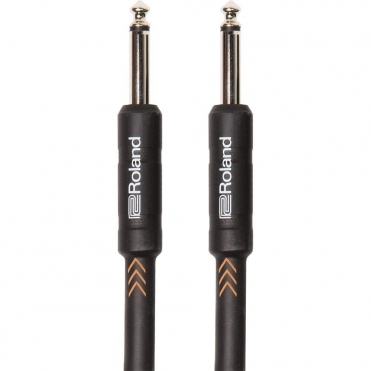
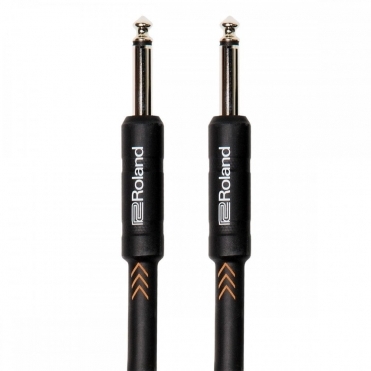
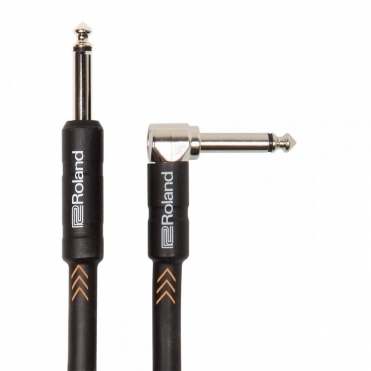
At Spears, we offer a selection of Roland leads and cables in a variety of lengths to suit different setups, whether you're working in a home studio, rehearsing, or performing live. These studio spares are designed to deliver reliable performance and are built to handle the demands of regular use.
We stock two main types: instrument cables and jack cables. Instrument cables are commonly used to connect electric guitars, basses, keyboards, and other instruments to amps or pedals. They’re unbalanced, meaning that they use two conductors, one for the signal and one for the ground, and are best suited for shorter distances to avoid interference.
Jack cables, which come with either 1/4 inch or 1/8 inch plugs, are more general-purpose and are used to connect a wide range of audio gear, including instruments, headphones, and audio interfaces. Depending on their design, jack cables can carry mono, stereo, or balanced signals, making them useful across many different musical setups, including as a guitar amp cable.
FAQs
What guitar cable should I get?
When buying a guitar lead, you want to look for three key factors: length, connector orientation, and warranty. You want to have just enough length to reach your amp or pedalboard rather than something too long, as this can cause interference with your sound. When it comes to orientation, straight-to-straight is standard, but a straight-to-angle or angle-to-angle plug can help reduce stress near pedals or instrument jacks.
Aside from this, you want to make sure that your cable has a good warranty. Brands with a strong track record and support tend to give more reliability, and our selection of Roland guitar cables offers a 2-year guarantee.
Are Roland guitar cables worth the price?
Roland guitar leads are built with high-quality materials and helpful design features that help preserve your tone and reduce unwanted noise. They use oxygen-free copper wire for cleaner sound and higher-density shielding to protect against interference from other electronic equipment. Many models also feature low-capacitance construction, which helps maintain clarity and prevents tone loss, which is especially important for longer cable runs.
In addition to their sound quality, Roland cables are known for their durability and reliability, with sturdy connectors and flexible jackets that hold up well against heavy use. While they may cost a bit more than basic cables, the improved performance and long-term reliability make them a worthwhile investment for any musician looking for the best guitar leads.
Can I use studio cables for live guitar setups?
Yes, you can use studio cables for live guitar setups, but there are a few things to consider. High-quality instrument cables used in studios are often just as suitable for live use, especially if they’re built with durable materials and include features like strain relief. In fact, some music leads are specifically designed to perform well in both environments.
That said, certain studio spares are made for stationary setups and may not hold up to the wear and tear of gigging. If a cable is thin, stiff, or delicate, it might not be ideal for stage use. Also, studio cables are often longer, which can lead to tone loss or added noise in a live setting. Overall, a well-made studio cable like the Roland RICB15 Straight Instrument Cable includes thoughtful design features, such as strong shielding and low capacitance, that make it a reliable choice for both studio and stage performance.
What are the best guitar cables for tone and durability?
Roland guitar cables are built with features that help preserve your instrument’s tone as accurately as possible. They use oxygen-free copper conductors for clean signal transfer and a low-capacitance design to reduce high-frequency loss, which is important for keeping your tone clear. Dense shielding also helps minimise interference from nearby electronics, which can introduce unwanted noise into your signal. Together, these elements help ensure that the natural character of your guitar or bass comes through without unwanted changes to your sound.
Durability is another key strength of music leads. They’re made to handle regular use in both studio and live environments, with sturdy connectors and flexible outer jackets that resist wear and strain. Whether you’re plugging in at home, rehearsing, or gigging frequently, these cables are designed to maintain performance over time. This combination of tonal clarity and reliable construction makes them a practical and long-lasting option for a wide range of musical setups.